AI-ASSISTED CLAIMS DECISION READINESS REVIEW
Make one AI-assisted claims decision easier to explain.
A fixed-scope external review that reconstructs who decided, what evidence was available, where AI influenced the workflow, and what remains unclear.
For claims operations leaders at small and mid-sized MGAs, program administrators, specialty or digital insurers, and claims TPAs.
FIXED FEEUSD 3,750
SCOPEOne defined workflow
DELIVERY7 business days
ACCESSNo production-system access
One defined workflow → four written outputsRequest a Readiness Review →
THE REVIEW IN ONE VIEW
ONE WORKFLOW · FOUR LENSESTHE QUESTION
Can the decision be explained from the available record?
THE REVIEW
Reconstruct the decision path, evidence, AI influence, and human responsibility.
WHY AN EXTERNAL REVIEW
One independent record of the path.
This review does not replace internal claims, QA, legal, or regulatory work. It gives one defined workflow an independent reconstruction in one place, so responsibility, evidence availability, AI involvement, and unresolved gaps can be examined together.
The review follows the available record. It separates established facts from missing evidence, conflicting accounts, and points that cannot be determined from the materials provided.
WHAT IS REVIEWED
One defined claims decision workflow.
The review examines one bounded AI-assisted workflow, such as a denial, payment, coverage, or escalation decision. It traces the decision-maker, the evidence available at the time, the role of AI, human review or override, and escalation ownership.
It is useful when a carrier or delegated-authority partner may ask how a workflow operates, when a governance or compliance question is coming, when a complaint or unexpected outcome needs a clear record, or when a vendor or workflow has changed. The trigger is simple: someone may ask who decided, what they saw, and where AI influenced the path.
WHAT THIS GIVES YOU
A starting record for the next question.
You receive one bounded written record to help prepare a carrier, delegated-authority, governance, compliance, board, or operational discussion: who owned the decision, what evidence was available at the time, how AI influenced the path, and what remains unknown.
It is a preparation document. It does not certify that the workflow complied with a rule and does not replace an audit, legal advice, regulatory response, or internal QA.
DELIVERABLES
FOUR BOUNDED OUTPUTSExecutive Finding
A concise statement of what can be reconstructed, what cannot, and what should be closed next.
Reconstruction Scorecard
A structured view of who made the decision, what evidence they saw, and where AI influenced the workflow.
Responsibility & Evidence Gap Table
A bounded record of missing evidence, unclear ownership, overrides, and escalation points.
Recommended Next Step
A practical next step for the defined workflow, without expanding into implementation or a formal audit.
WHAT YOU RECEIVE
See the shape of the written review.
These illustrative specimens show the format and level of detail of the four outputs. They are synthetic examples, not client work or customer results.
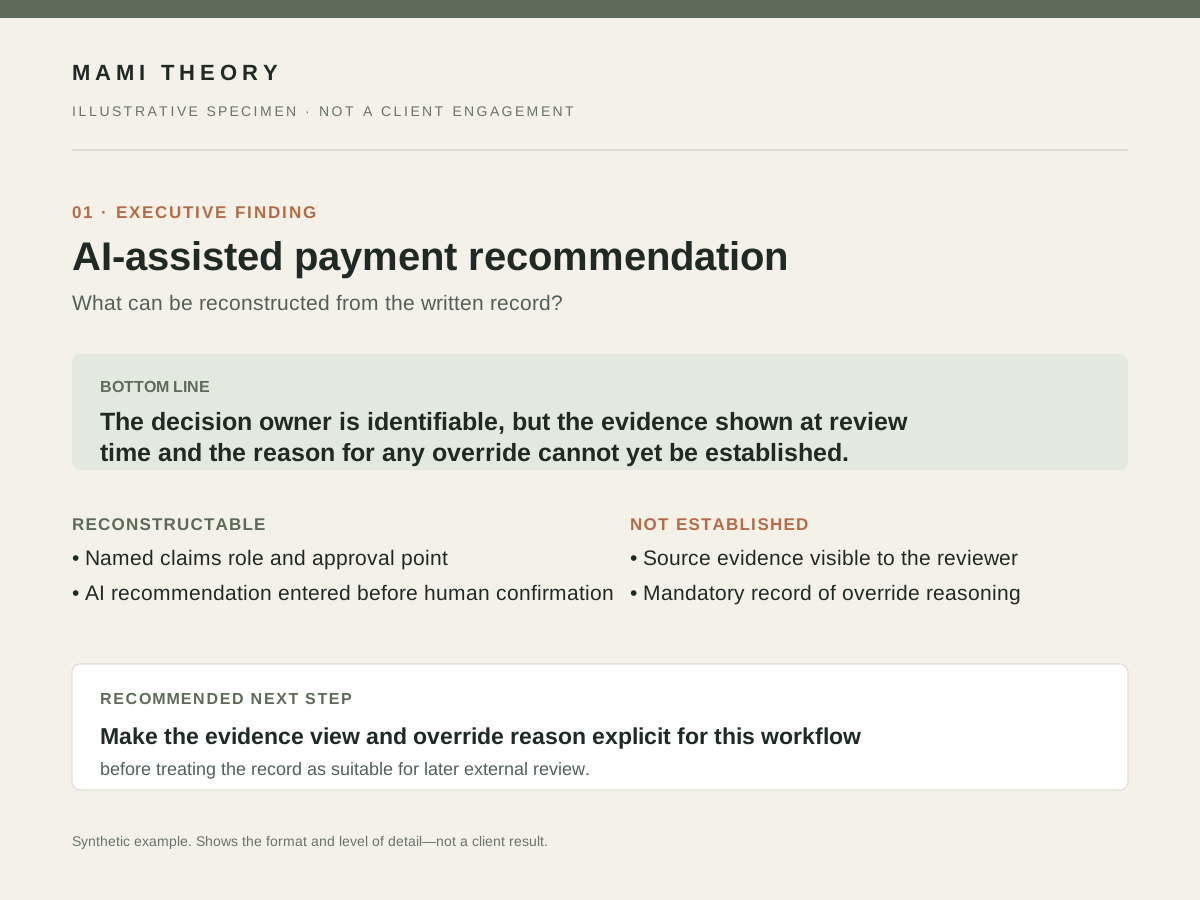
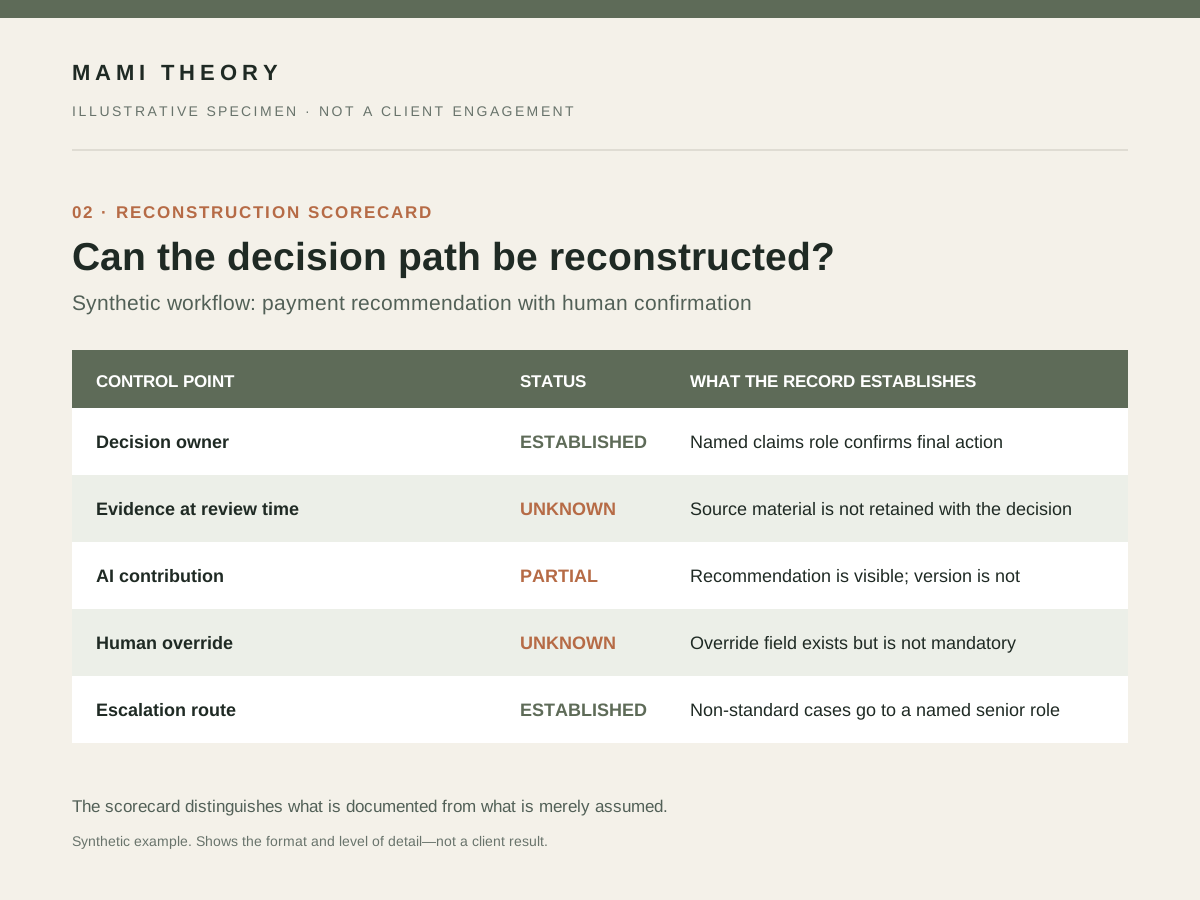
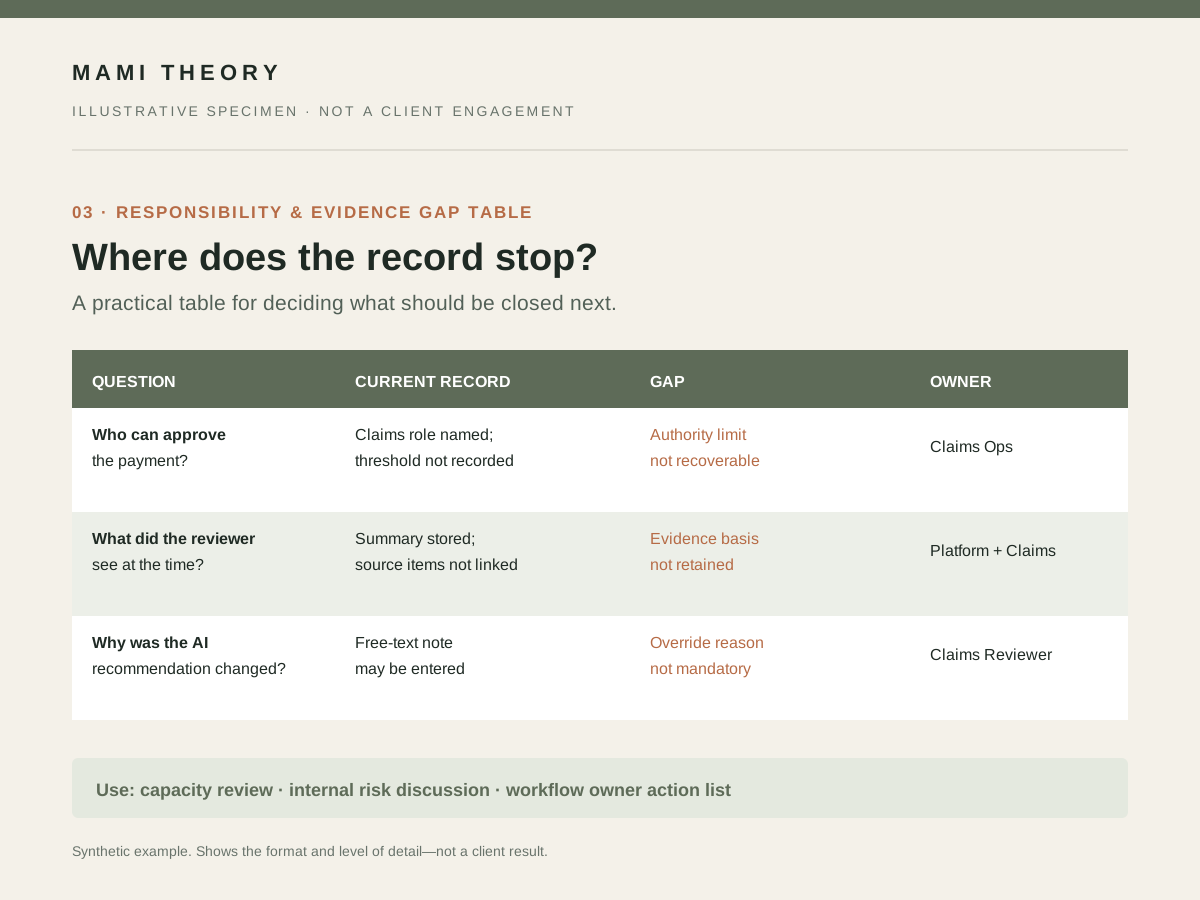
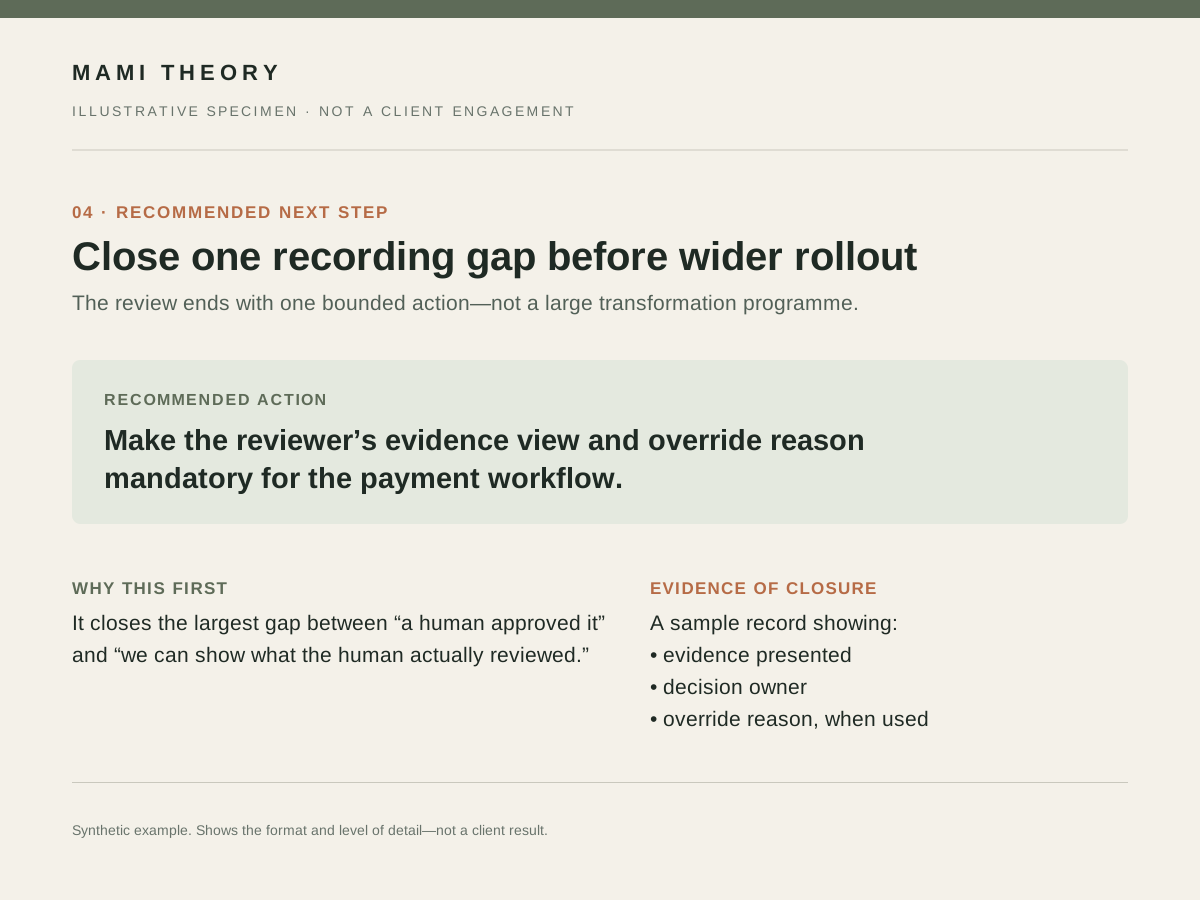
Illustrative specimen only. No real organisation, claimant, claim file, vendor record, or customer data is represented.
The four previews are parts of one coherent review package, not four unrelated products.
The four specimens are read as one sequence: decision ownership → evidence available at the time → AI influence and human responsibility → the next practical action.
HOW IT WORKS
Async-first, fixed scope.
- DefineConfirm one workflow, its decision point, and the roles in scope.
- ReviewExamine written workflow descriptions, role accounts, and redacted supporting materials.
- ReconstructSeparate established facts, missing evidence, conflicting accounts, and AI influence.
- ReportReceive the four written outputs within 7 business days.
SAFE INTAKE
Start without claimant data or confidential documents.
No production-system access is required. No claimant data is required. The initial inquiry should contain only a short description of the workflow and why it is being reviewed.
SUITABLE AT THE START
Redacted workflow descriptions, role descriptions, blank forms, policy excerpts, evidence-field inventories, and written role-owner accounts.
DO NOT SEND INITIALLY
Claimant names, claim files, health information, credentials, payment data, private correspondence, or live case records.
SCOPE BOUNDARY
This is not legal advice, regulatory certification, a formal audit, cybersecurity testing, model validation, or implementation work.
PROVIDER
Independent, founder-led practice.
MAMI Theory is an independent research and advisory practice led by Mami. It is not an insurer, claims administrator, audit firm, law firm, or software vendor.
This is a market-test offer. No client testimonials or paid-client results are presented yet. The work is deliberately limited to one workflow and written preparation; it does not claim regulatory, legal, audit, or model-validation authority.
TRANSPARENCY
A market-test offer, stated plainly.
This offer is currently in market test. No client testimonials are presented yet. MAMI Theory does not use invented, anonymous, or fabricated testimonials.
Any example material is synthetic and shows the format of the work, not a client result.
ESSENTIAL QUESTIONS
Who is this for?
Claims operations leaders responsible for, or overseeing, one AI-assisted decision workflow.
How long does it take?
Seven business days after scope confirmation and receipt of the agreed materials.
What does it cost?
USD 3,750 fixed fee for one defined AI-assisted claims decision workflow.
Do you need production access?
No. Production-system access and claimant data are not required.
Is this a formal audit?
No. It is an external readiness review with a fixed scope and written findings.
REQUEST A READINESS REVIEW
Start with a short, safe inquiry.
Describe the organization, the claims workflow, and why the decision needs to be reconstructed. Do not send claimant data or confidential documents in the initial inquiry. MAMI will confirm fit before any engagement begins.
Request a Readiness Review →